
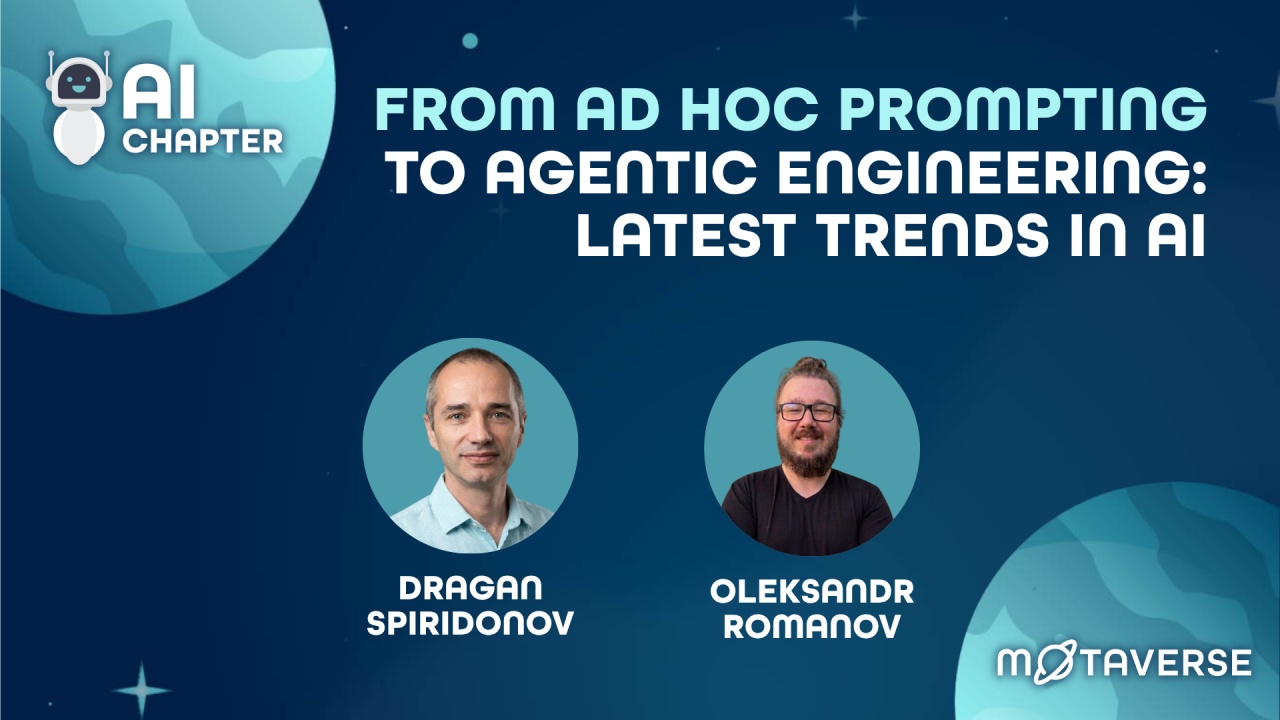


In this first session of the AI Chapter, Dragan and Oleksandr explore the evolution of AI in software engineering and testing, focusing on the transition from simple prompt engineering to sophisticated agentic engineering.
Dragan and Oleksandr discuss how AI has rapidly evolved from basic autocomplete features to powerful AI agents that can autonomously perform complex tasks. They examine a Google research paper on AI-driven software development lifecycle and explain the key differences between chatbots and AI agents.
The discussion covers the building blocks of AI agents, including reasoning engines, tools, memory, and orchestration frameworks. They address the shift from syntax-focused coding to intent-based engineering, where developers describe what they want rather than how to code it.
Dragan and Oleksandr also discuss the spectrum of AI usage from experimental "vibe coding" to structured agent engineering for critical applications. They emphasise the importance of proper guardrails, domain knowledge, and evaluation systems when working with AI agents.
The session concludes with practical advice on code review processes for AI-generated code and the evolving definition of quality in non-deterministic AI systems.
Resources

Comments